Burning the Bad Mood: The Ritual That Opens Mazatlán Carnival
Burning the Bad Mood.
Burning the Bad Mood.
Before the queens are crowned. Before the grand parades roll down the Malecón. Before the Naval Battle fireworks light up the Pacific sky.
There is fire.
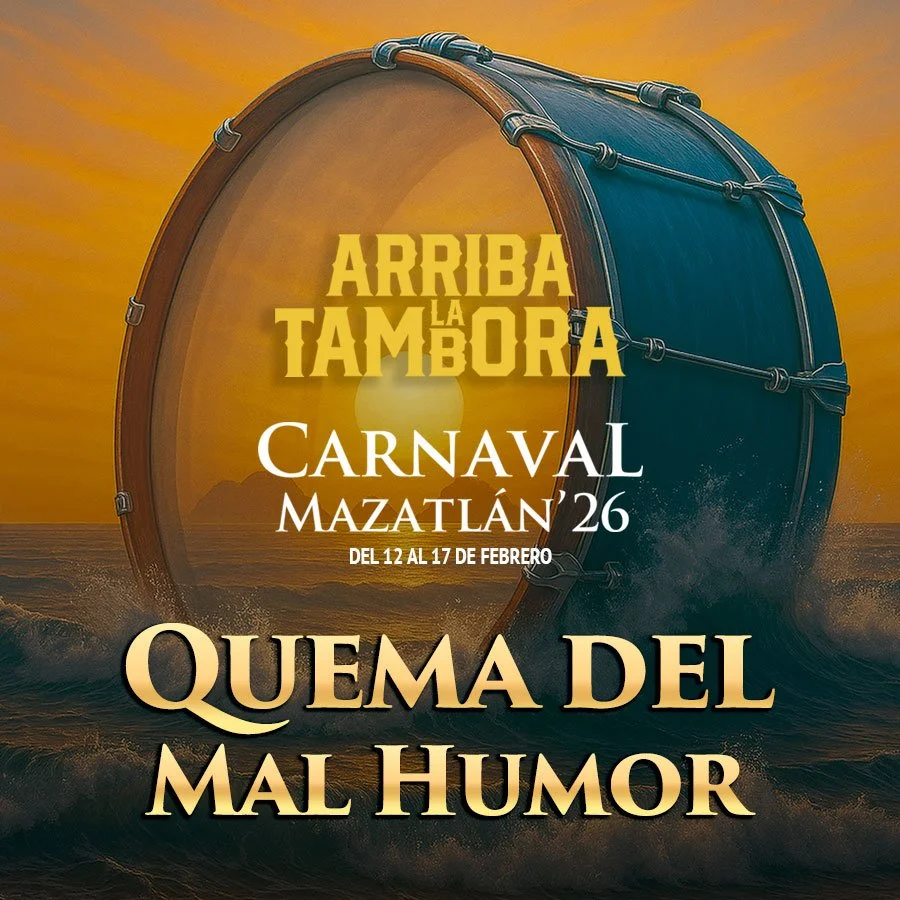
Every year, the Quema del Mal Humor — the Burning of Bad Humor — officially opens the festivities of the Carnaval Internacional de Mazatlán. Ritual. Satire. Release.
It is the moment Mazatlán collectively exhales.
A Tradition Rooted in History
Mazatlán's carnival dates back to 1898, one of Mexico's oldest carnivals. From its earliest days, carnival was meant to be an inversion of everyday life — a time for humor, theatrical rebellion, and social commentary before the solemnity of Lent.
The "Burning of Bad Humor" became the symbolic cleansing that marks this transition.
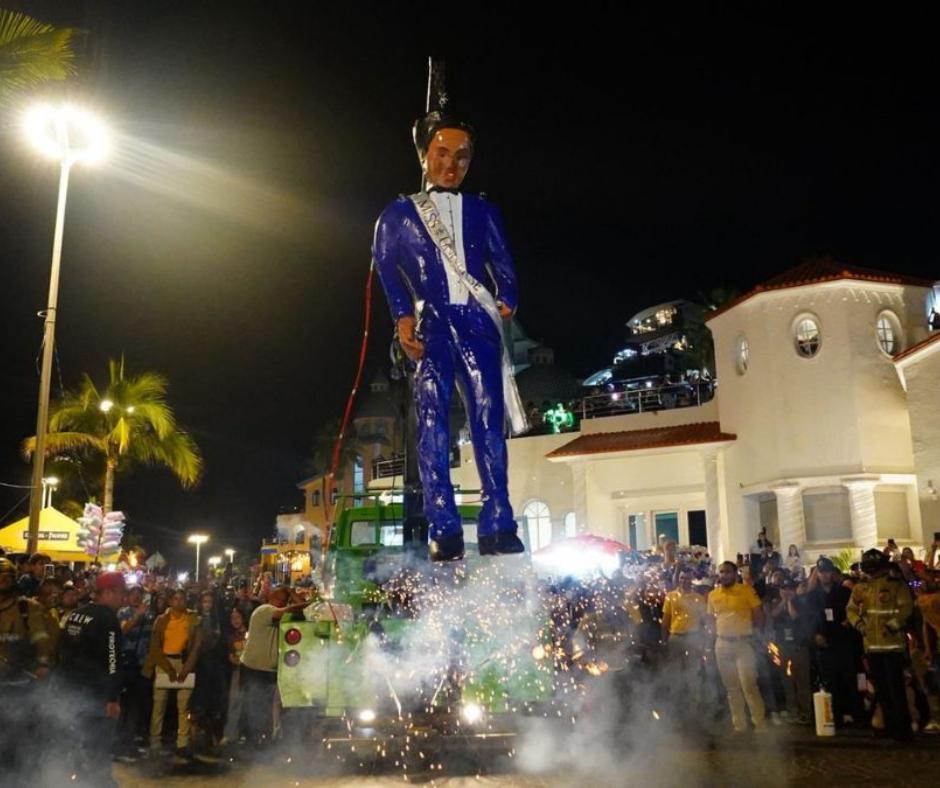
Each year, a large effigy — known locally as a monigote — is created to represent whatever weighed on the public mood. Sometimes it's a public figure. Sometimes it's a political tension. Sometimes it's something abstract, like inflation or collective frustration.
The message is simple: We burn what burdens us. We step forward lighter.
Who Decides What Gets Burned?
The choice is made by the Comité de los Bolcheviques — a long-standing carnival group founded in the 1920s.
Despite the dramatic title, they are not political revolutionaries. The name was adopted humorously after the Russian Revolution, reflecting carnival's spirit of playful rebellion. Their role is ceremonial and cultural — they act as the theatrical "voice of the people."
Each year, they announce who or what will represent "bad humor," often dramatically and satirically. The selection reflects current events, controversies, or cultural moments that resonated with the public.
It is not about attack. It is about catharsis.
2025: El Fofo Márquez
In 2025, the effigy represented Rodolfo 'El Fofo' Márquez, a controversial social media influencer whose public behavior had sparked widespread debate.
The decision generated headlines, as it often does. The burning took place along the Malecón in Mazatlán, accompanied by music, crowds, and fireworks.
The flames rose. The crowd cheered. Carnival had begun.
2026: Nawat Itsaragrisil
For 2026, the Bolcheviques selected Nawat Itsaragrisil, the Thai pageant director behind the Miss Universe Thailand franchise, following controversy tied to remarks involving Mexican contestant Fátima Bosch.
Again, the choice reflected the public conversation and collective sentiment of the time. The effigy is scheduled to be burned on opening night, continuing the tradition of satire and symbolic release.
More Than Fire
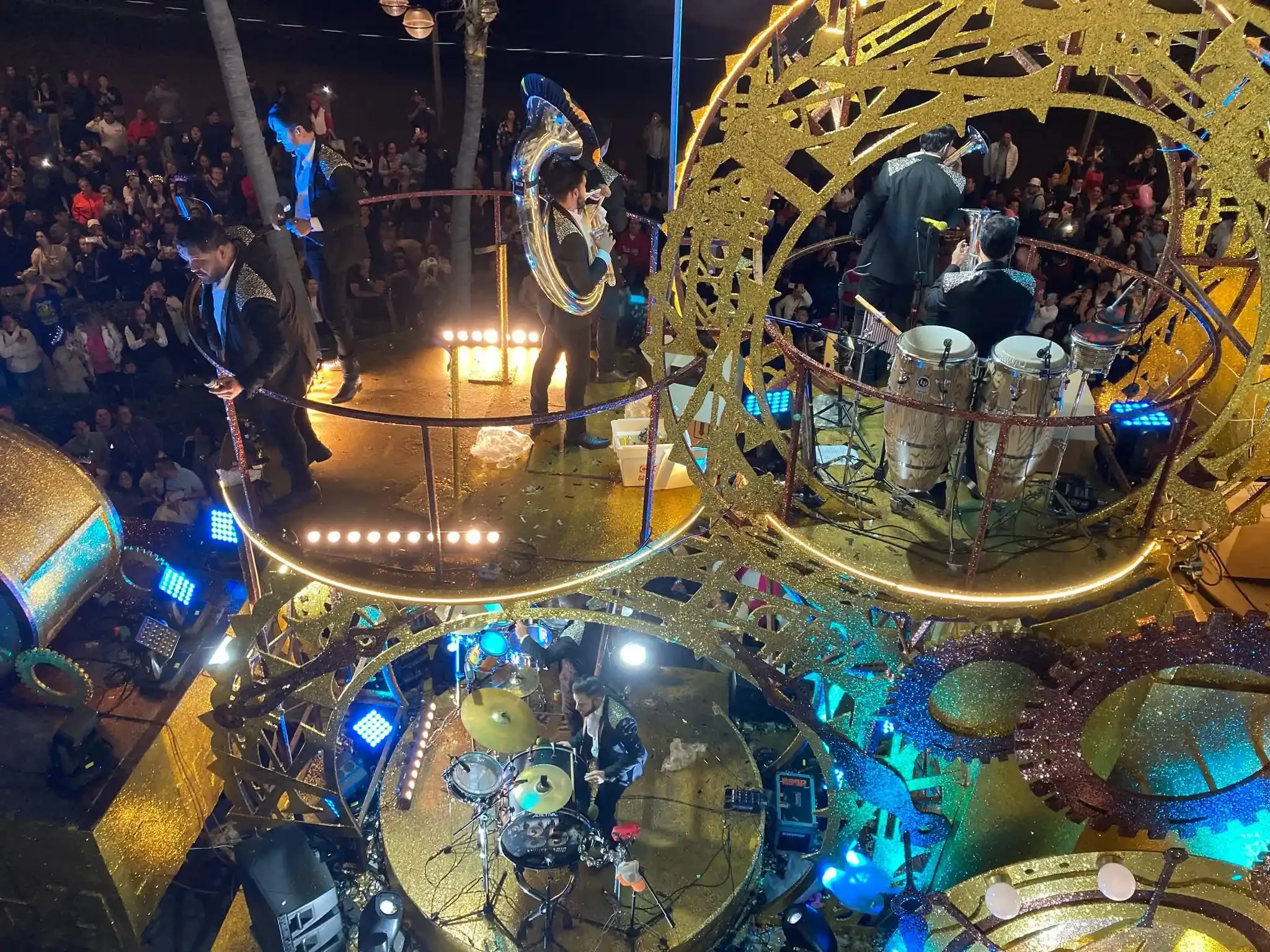
The ceremony typically unfolds along the oceanfront, where thousands gather under the warm night air. Music plays. The countdown begins. Fireworks burst overhead.
And when the effigy ignites, something shifts.
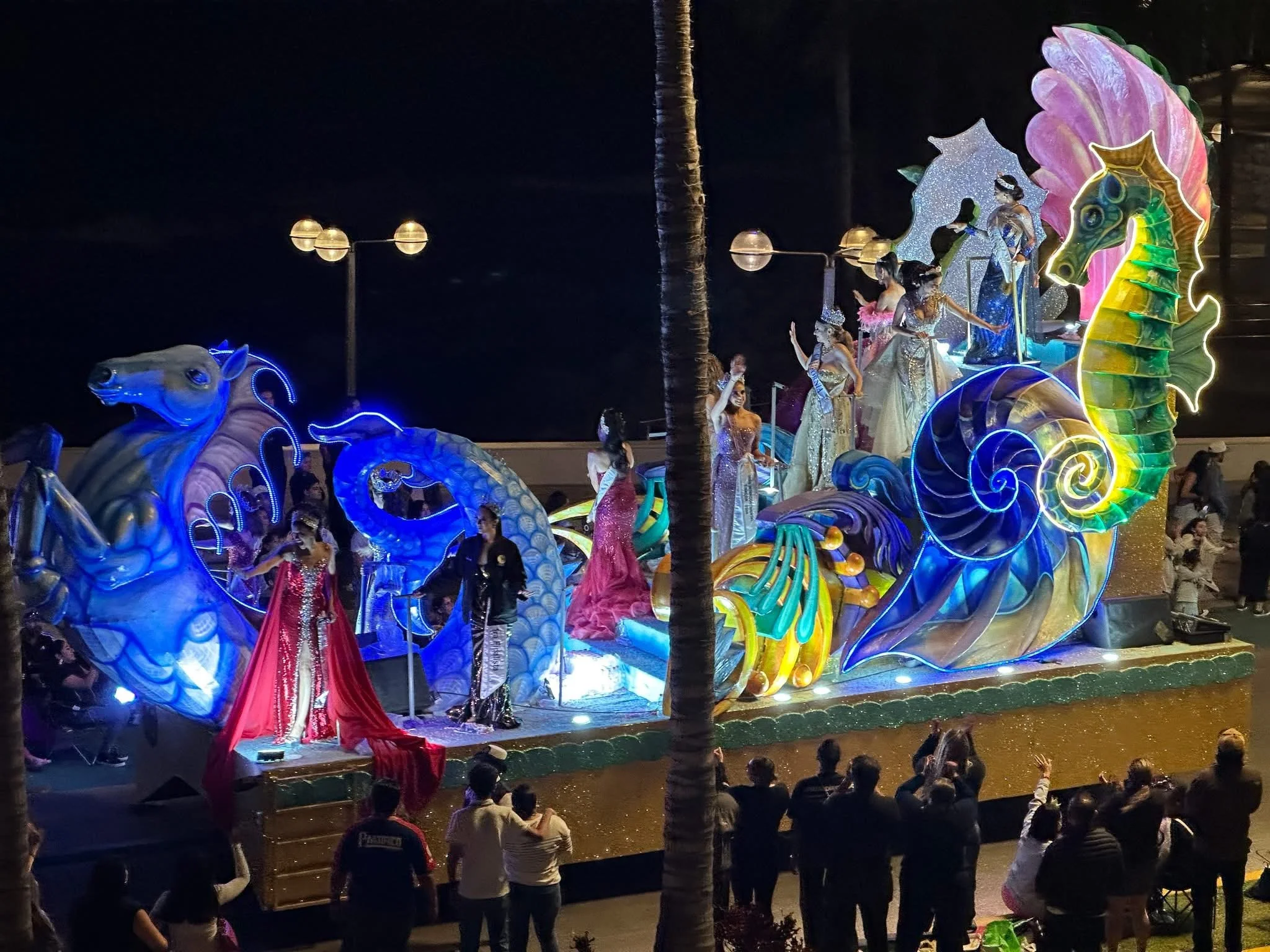
The act signals the official start of the carnival — days filled with coronations, parades, music, and the Naval Battle fireworks that light up the Pacific in tribute to Mazatlán's maritime history.
But none of it begins without the burn.
Why the Flames Matter
In a city that has rebuilt itself more than once, the Quema del Mal Humor feels deeply communal. It allows space for humor in hard times. It transforms tension into theater. It invites the public to participate in letting go.
For locals, it is continuity. For visitors, it is unforgettable.
For everyone, it is permission to step into joy together.
And perhaps that is why the flames matter.
Because before the confetti falls and the queens wave from glittering floats, Mazatlán chooses — deliberately — to leave the bad mood behind.
Then the music begins.