Our Last Trip to Bali, Part 2.
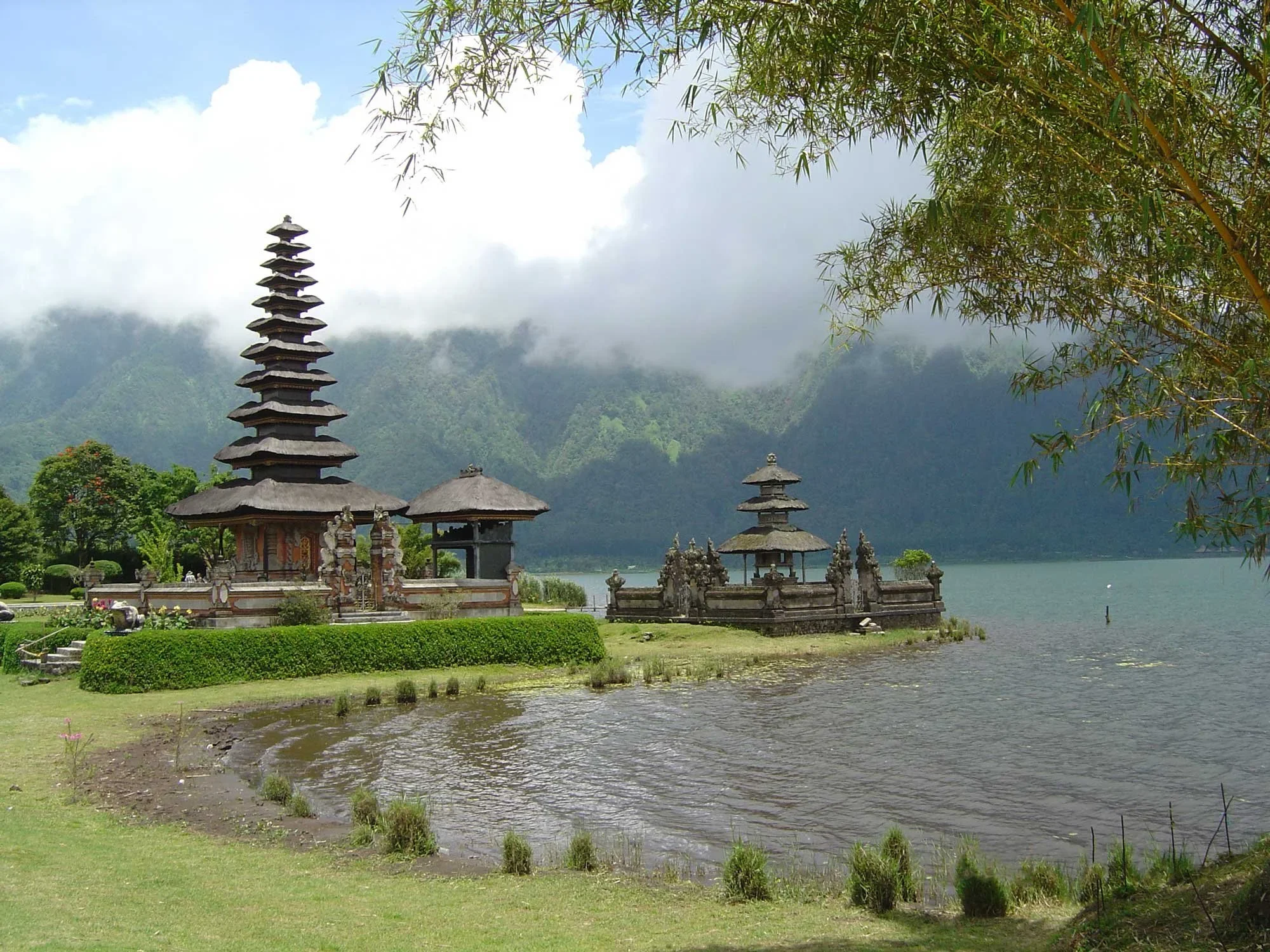
The water temple at Lake Bratan on the mountain drive to Lovina
If you read the first part of this story, you know we left off in Ubud, with a temple at sunset and a promise. The promise was Nyoman. Twenty plus years of not knowing where he was, and a single photograph from 1993, about to do something I still find hard to believe.
For the drive to Lovina, we booked a car. It is a long way north, almost three hours across the mountains, and every minute of it is worth looking at. We stopped, of course, at Lake Bratan. You have seen it, even if you think you haven't, the temple sitting low on the water with the mountains behind it. It is on the postcards for a reason.
We pulled over somewhere along the road to eat, and we got to talking with our driver. His name was Alan. On the small chance that a man who drives this island for a living might have heard something, Randy took out the photographs from 1993 and showed him Nyoman's face. I want you to picture the next moment the way it actually happened, because I could not have invented it. Alan looked at the picture and said, of course, he knew Nyoman. He was still living in the same village.
I am not sure I breathed for a second. Randy asked Alan, carefully, whether he could find out if Nyoman would even want to see him. Twenty years is long enough that a person is allowed to have moved on.
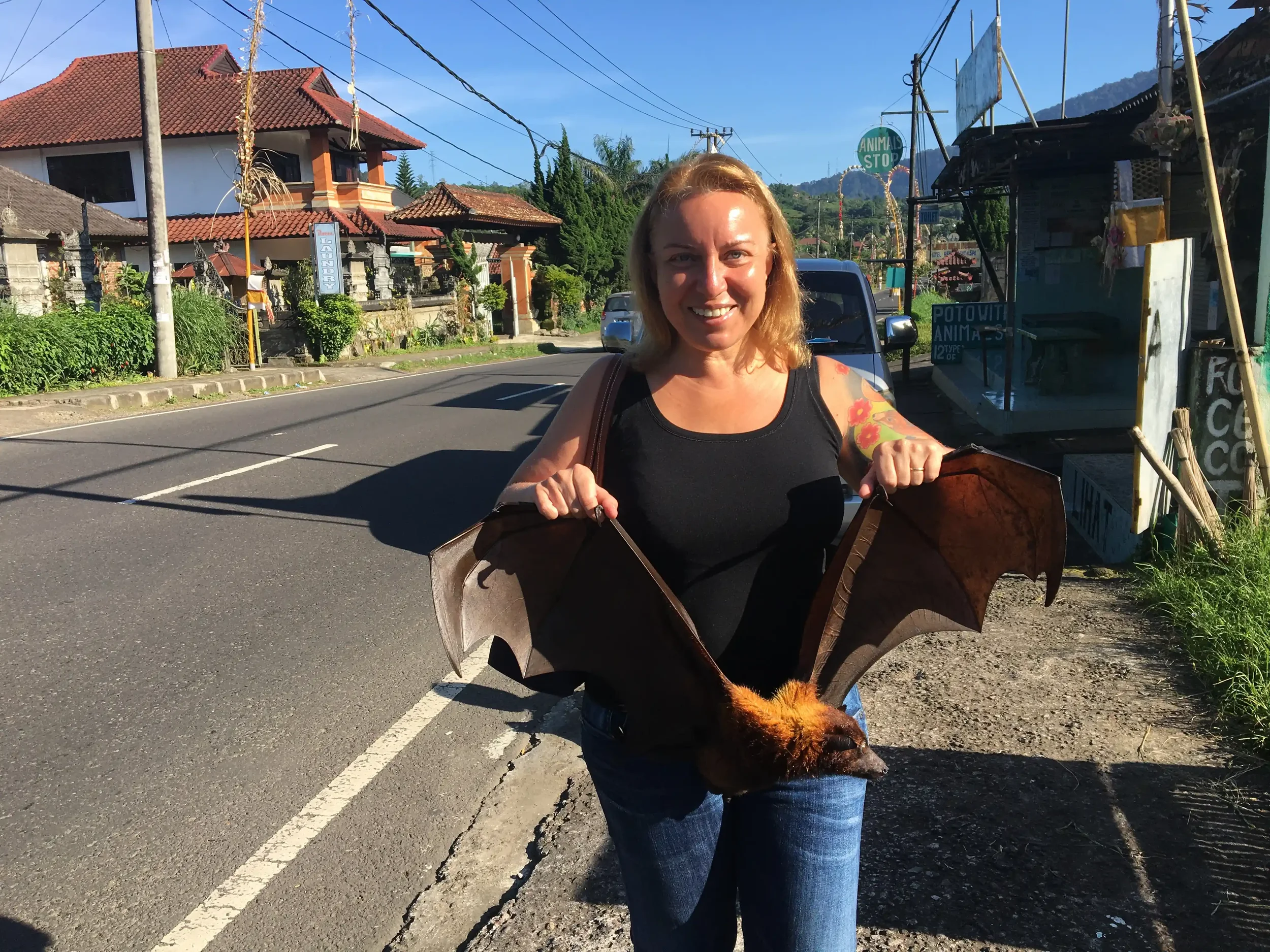
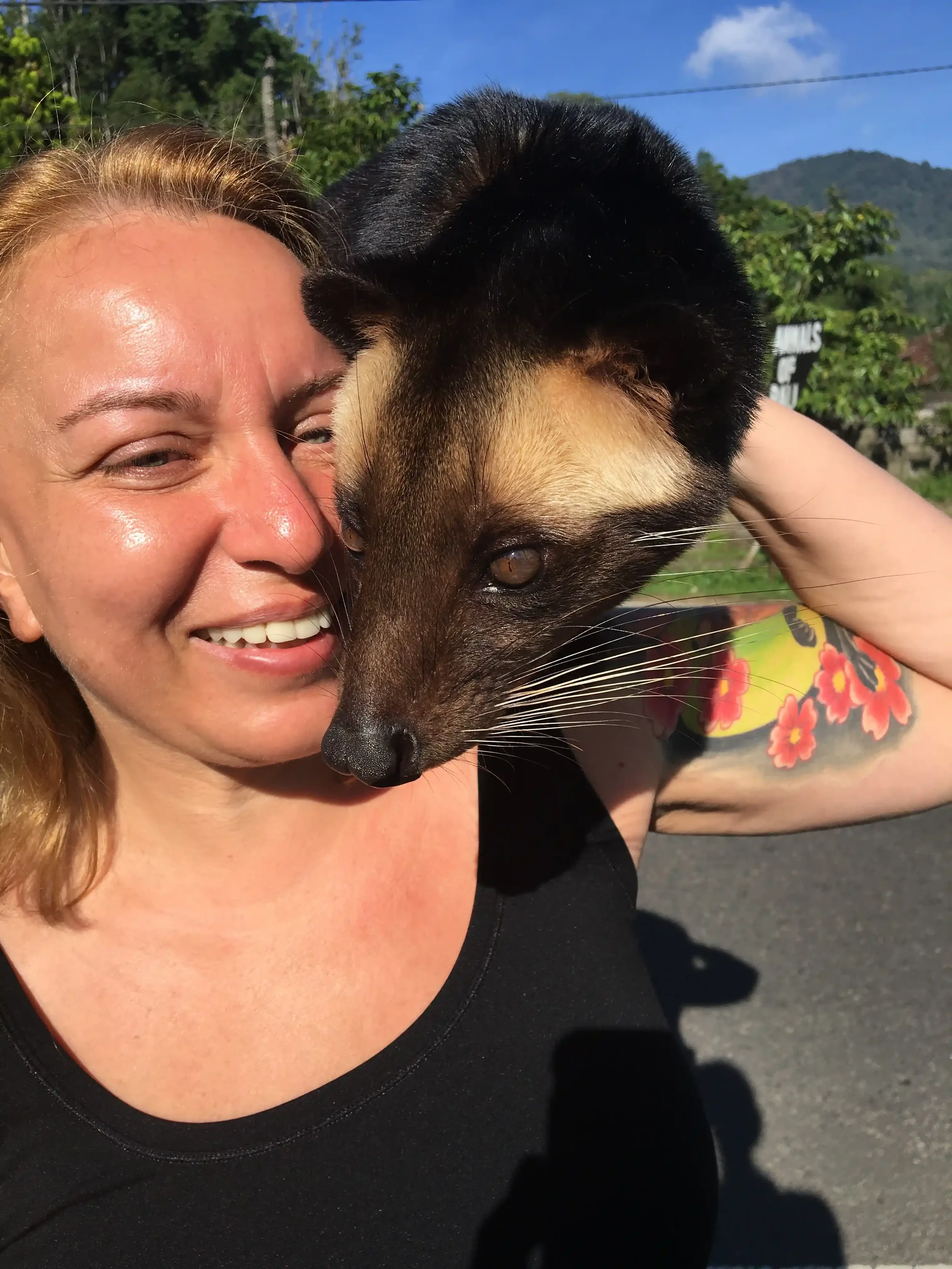
The drive gives you time, and the road gives you things to stop for. There is a place in the mountains with a hand-painted sign, "Photo with Animals," where a man keeps a fruit bat and a small sharp-faced civet and will drape either one on you for a few thousand rupiah. The bat opened like a leather umbrella and was, against all expectation, calm. The civet decided it lived on my shoulder now. I know exactly what you are thinking, and you are right to think it; I thought it too, somewhere between the second and third photograph. I will only say that we did not plan it, the animals were unbothered, and Randy has the picture to prove I laughed the whole time.
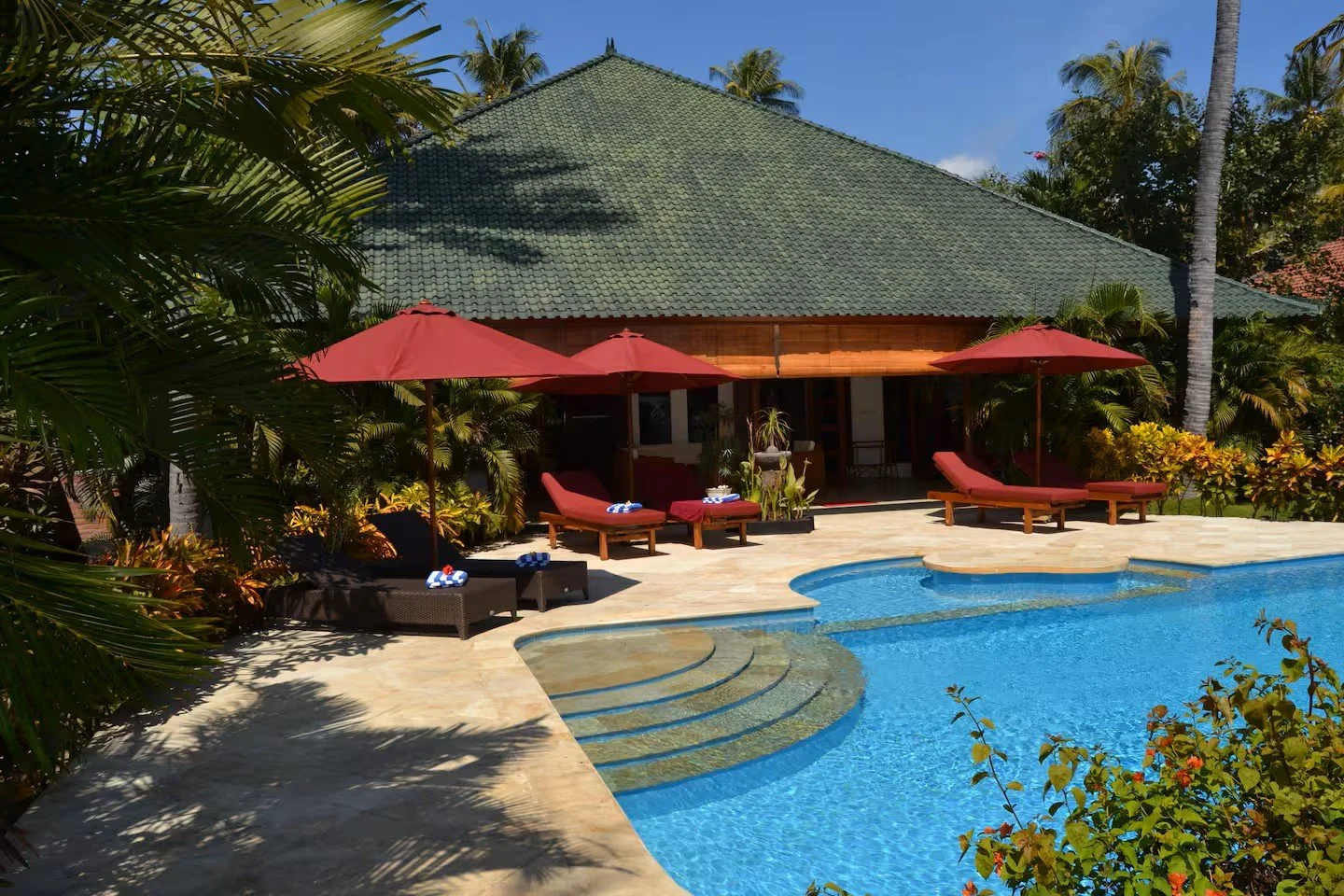
We reached the north coast and checked into our villa. Bali still keeps a few places you can rent without emptying your account, and ours was one of them, a house called Villa Damai Seririt, found through Airbnb. It is not as cheap as such places used to be, but it is still lovely, with a good pool and the ocean right in front of it. One honest word of warning, since I would want a friend to tell me: for about half the year, the wind comes off Java and carries a great deal of garbage from the sea onto the beach. When that is happening, stay out of the water. The rest of the year, the wind turns and blows from Bali, and the beach is clean. In Lovina proper, the local people clean the sand regularly. Our villa sat a little off the road, beyond where that daily cleaning reaches, so the wind decides things there.
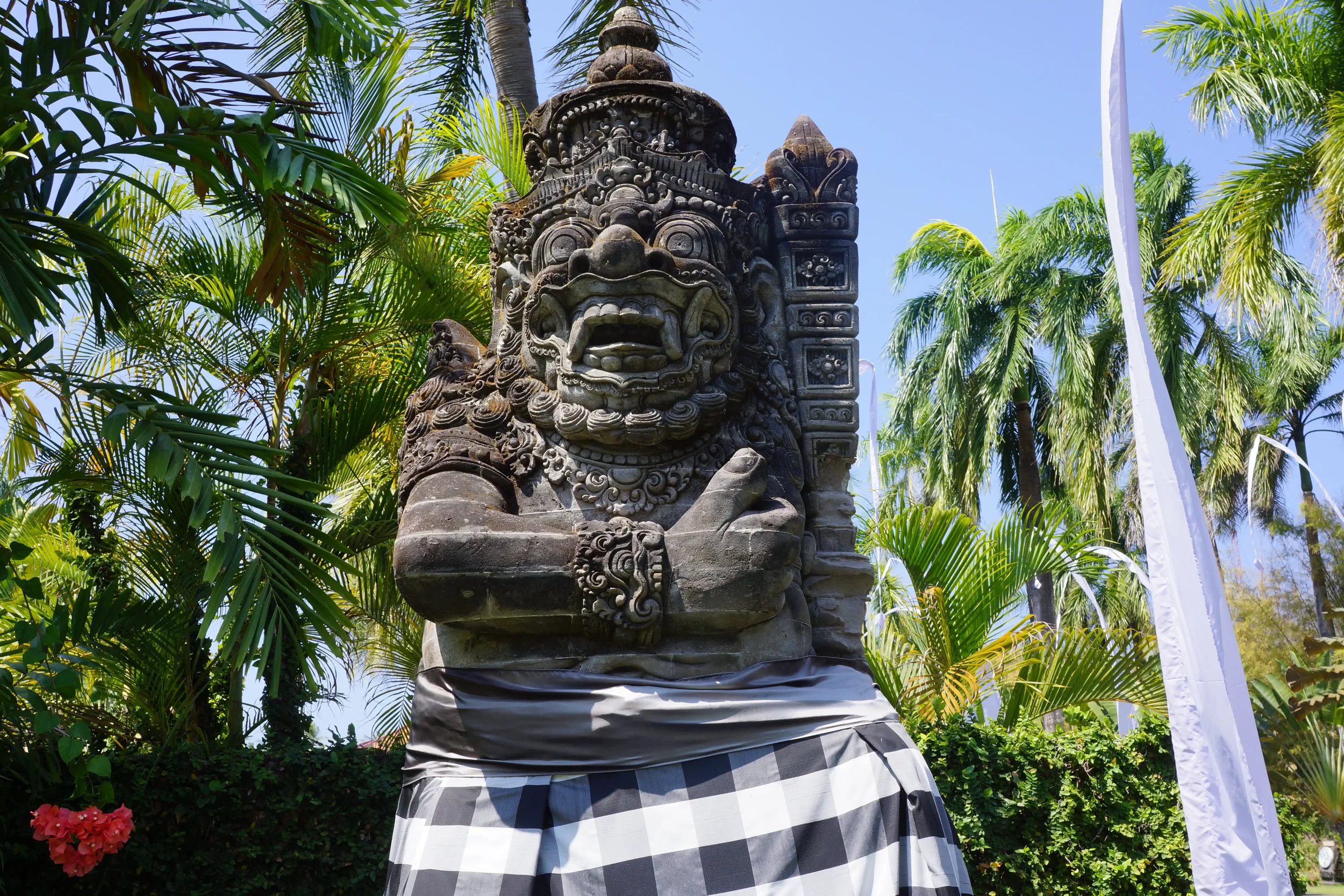
The first thing you notice at a Balinese gate is the guard. Stone figures stand at the corners of temples and houses, crowned and snarling, wrapped from the waist down in black-and-white checkered cloth. The cloth is called poleng, and the two colors are the point: good and bad, light and dark, held together because you cannot have one without the other. Once you have seen it you start seeing it everywhere, on statues, on shrines, tied around a tree that matters. It is the island telling you, at every doorway, what it believes.
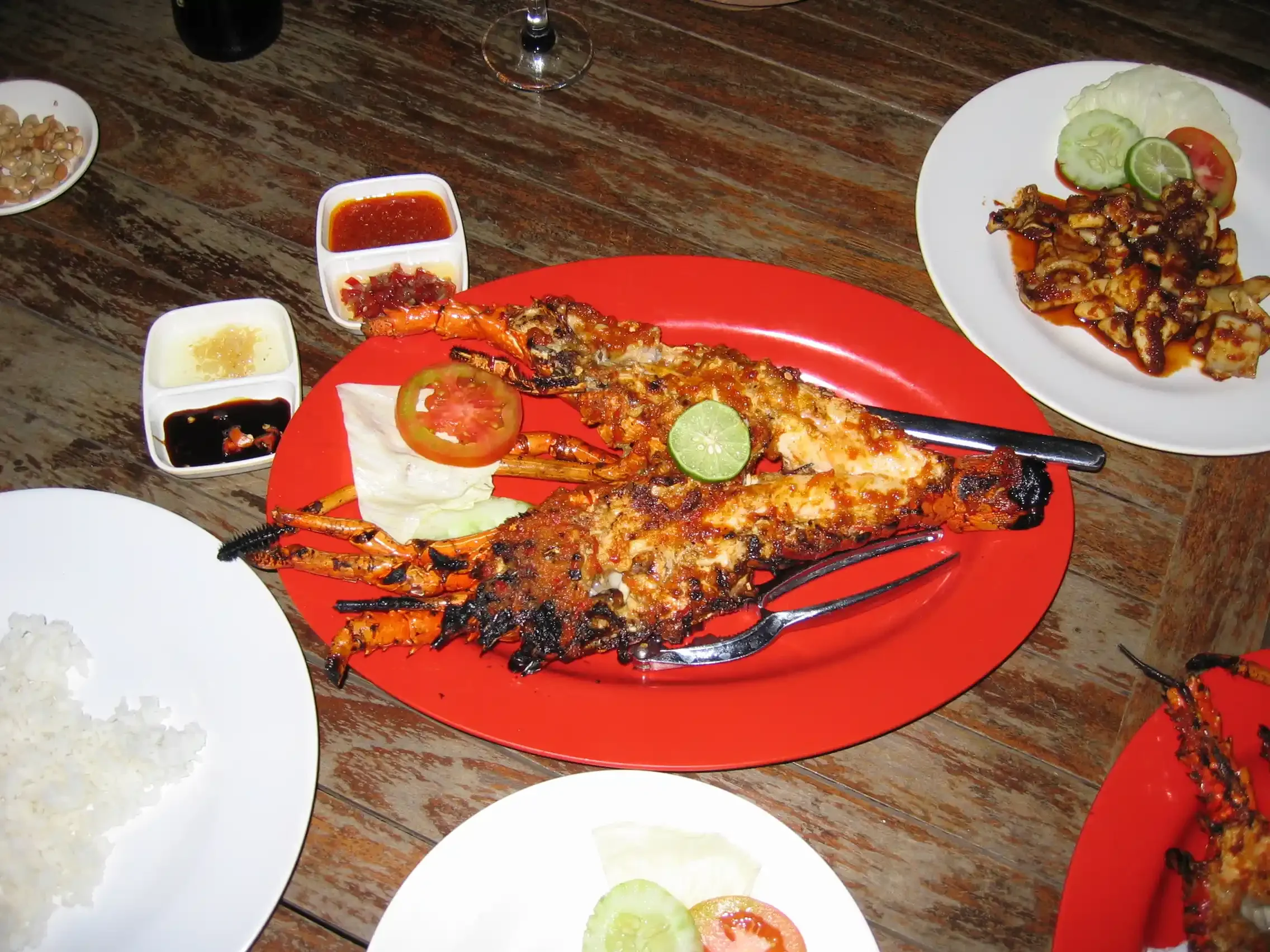
Our hosts offered to make our breakfast, which was kind, but we liked the quiet of doing it ourselves. We cooked in the mornings and went out at night. Lovina was ten minutes away and full of places where the food was very good.
On the second day, Alan came back with the answer. He had found Nyoman, and Nyoman was not hesitant or polite about it. He wanted to see Randy. So Randy went alone. I stayed at the villa on purpose. Some reunions need to happen without an audience, and this one was twenty years overdue and not mine to sit inside.
Randy came back with red eyes. The reunion had been sweet and not only sweet. He and Nyoman knew each other on sight, the way you know a voice in another room. Nyoman had kept an old journal, and in it he had written down their adventures from all those years ago, the days in the bars, the music, the new friends, all of it. He brought the journal out, and the two of them sat together turning its pages and giving each other their younger selves back for an afternoon.
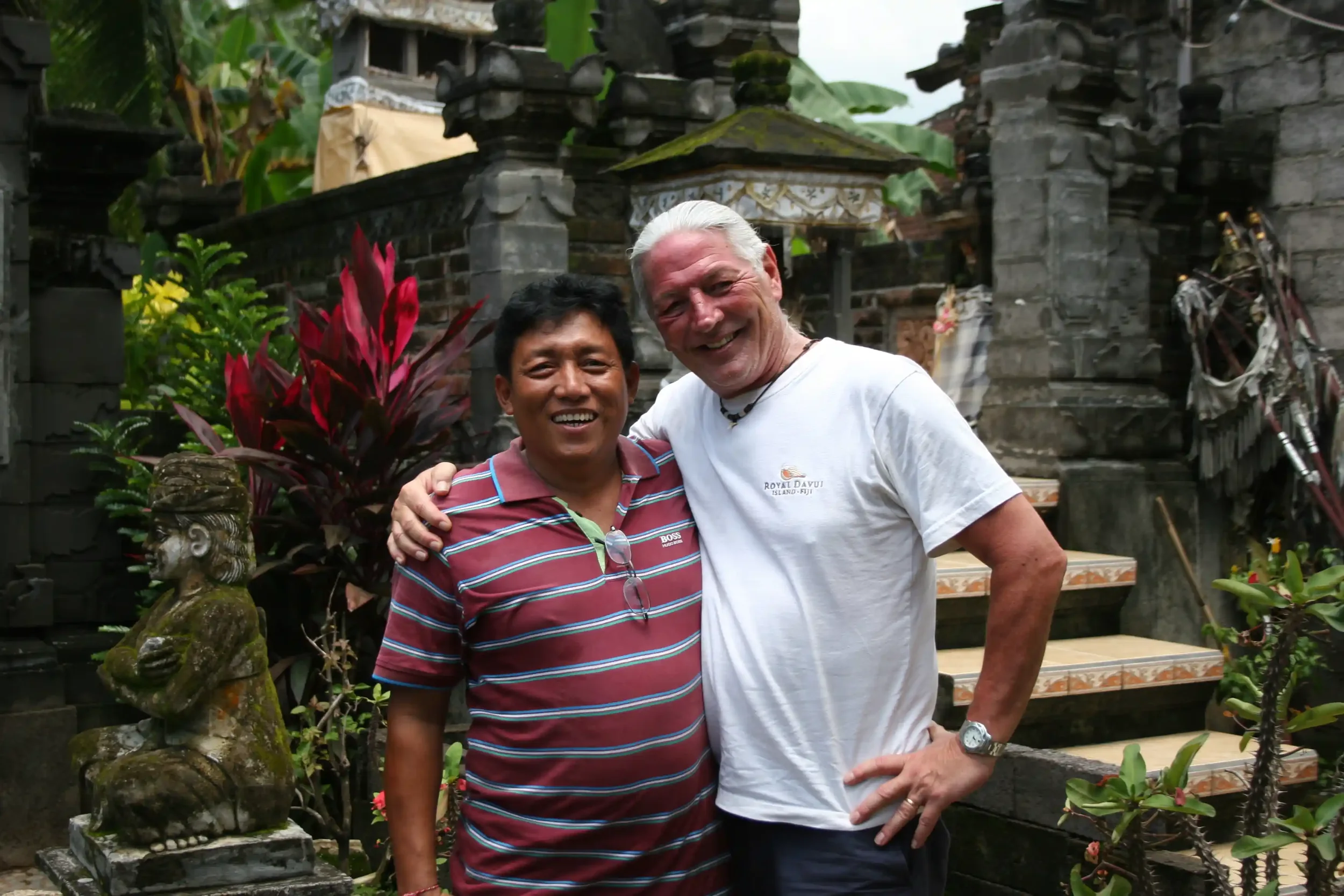
Two old friends reunited in a Lovina village after twenty five years apart

Life had not been gentle with Nyoman. His wife had been in a car accident, and her health had not recovered. He was still the one driving the car. A few days after that first meeting, we had them both at the villa, Nyoman and his wife as our guests, and I will not try to put into words what it did to me to sit across from them. Some things you carry instead of describing.
Why we keep going back in March

We usually try to be in Bali at the start of March, because of a holiday the two of us love more than almost any we have anywhere. It is called Nyepi, the Balinese Hindu New Year, the Day of Silence.
For twenty-four hours the island stops. Completely. The whole point is self-reflection and meditation, and the rules are not suggestions.
They are enforced, and they apply to everyone, tourists included. The Balinese observe four amati, four restraints:
Amati Geni, no fire or light. No fires, no electricity, no bright lights. After dark every outside light is off and the inside ones kept to the smallest glow possible.
Amati Karya, no work. Every kind of labor and activity stops.
Amati Lelunganan, no travel. No one is out on the streets or the beaches. Traditional Balinese guards, the pecalang, walk the villages to keep it that way. Even Ngurah Rai International Airport closes.
Amati Lelanguan, no entertainment. Fasting, and no television, no diversion, and in many places no mobile data or internet either.
The hotels do keep some light and food going for visitors, but even there the lamps are dimmed and there is no noise. And yes, the airport really does close. Not one flight goes in or out of Bali that day.
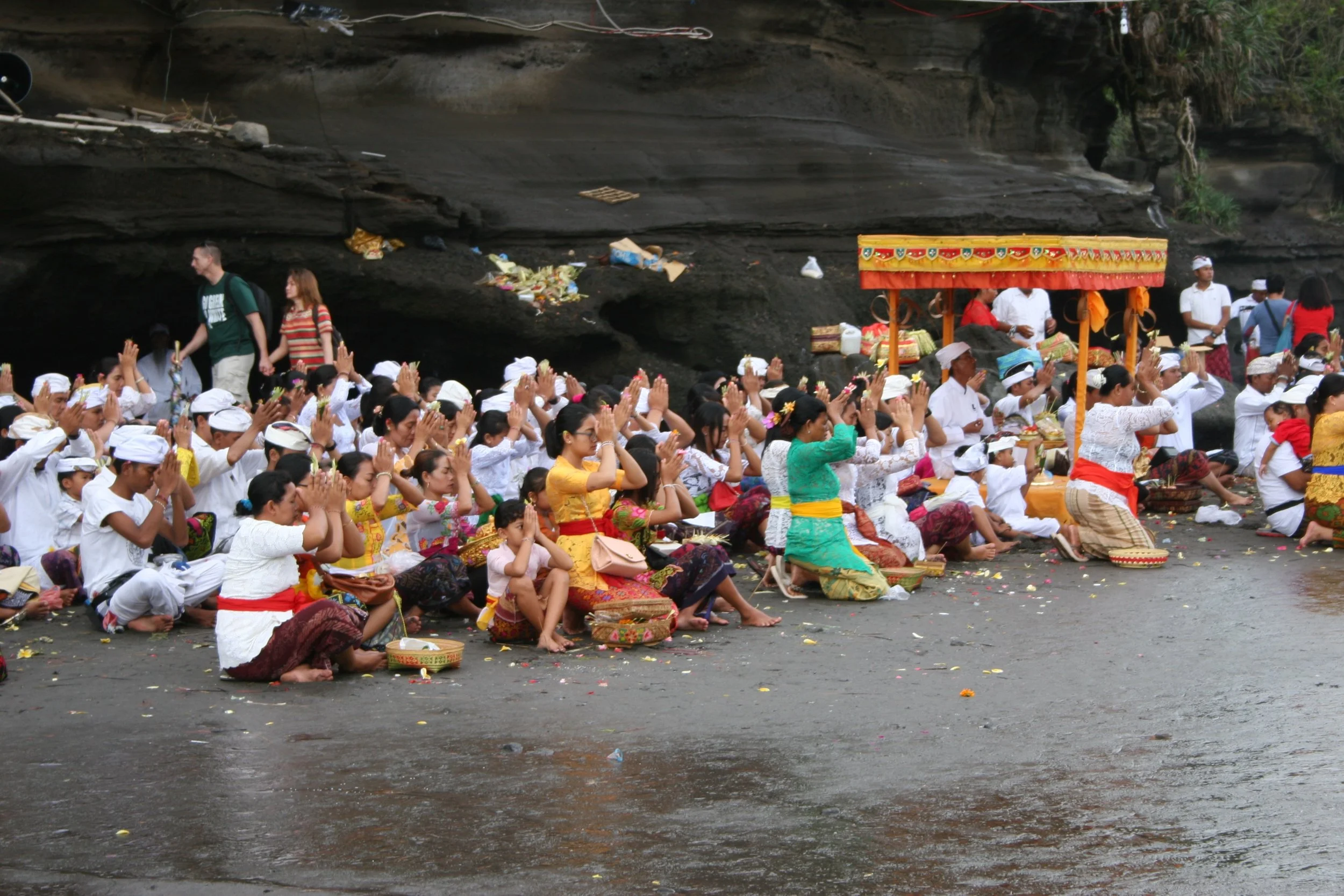
But the day before Nyepi is, quietly, one of my favorite days anywhere in the world.
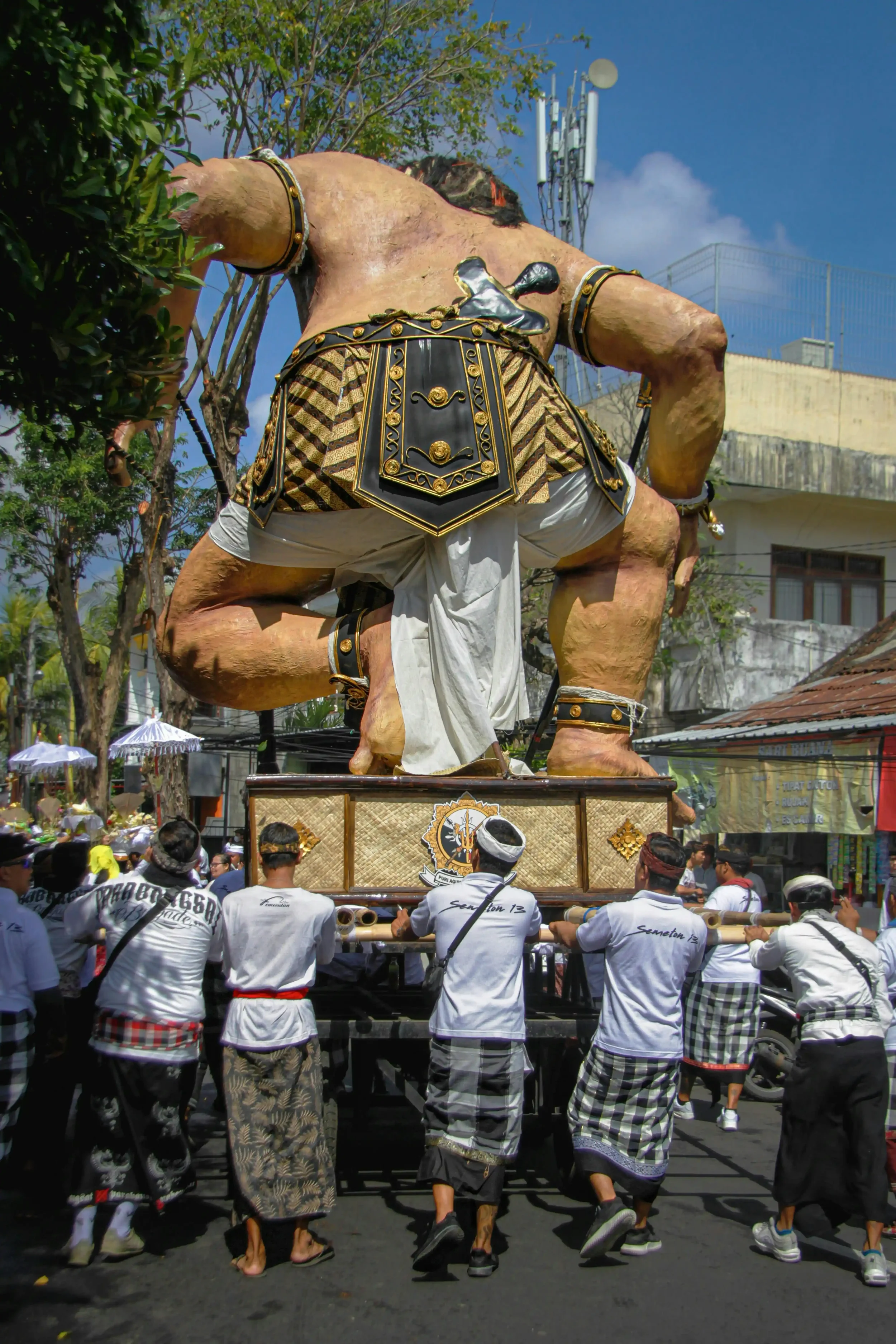
Before the silence comes the noise. Most Balinese villages build ogoh-ogoh, enormous statues of demons made from painted bamboo, papier-mache, cloth, and tinsel. They are the bad things made visible, malevolent spirits, negative forces, sometimes whole characters out of Hindu mythology. The villages parade them, and then they burn them. In Lovina they carry the ogoh-ogoh down to the beach and burn them there. We had arranged in advance with a local restaurant to hold a seat for us so we could watch. In the days before, Alan drove us around so we could see the statues half-built in the surrounding villages, monsters in progress, leaning in someone's yard.
Here I have to tell you something about myself. February 29 is my birthday. My passport says March 1. My father was an obstetrician, and he delivered me, and he wrote my birth certificate for March 1 so that his daughter would not have a birthday only once every four years. But when a leap year does come around, we make an enormous fuss out of it.
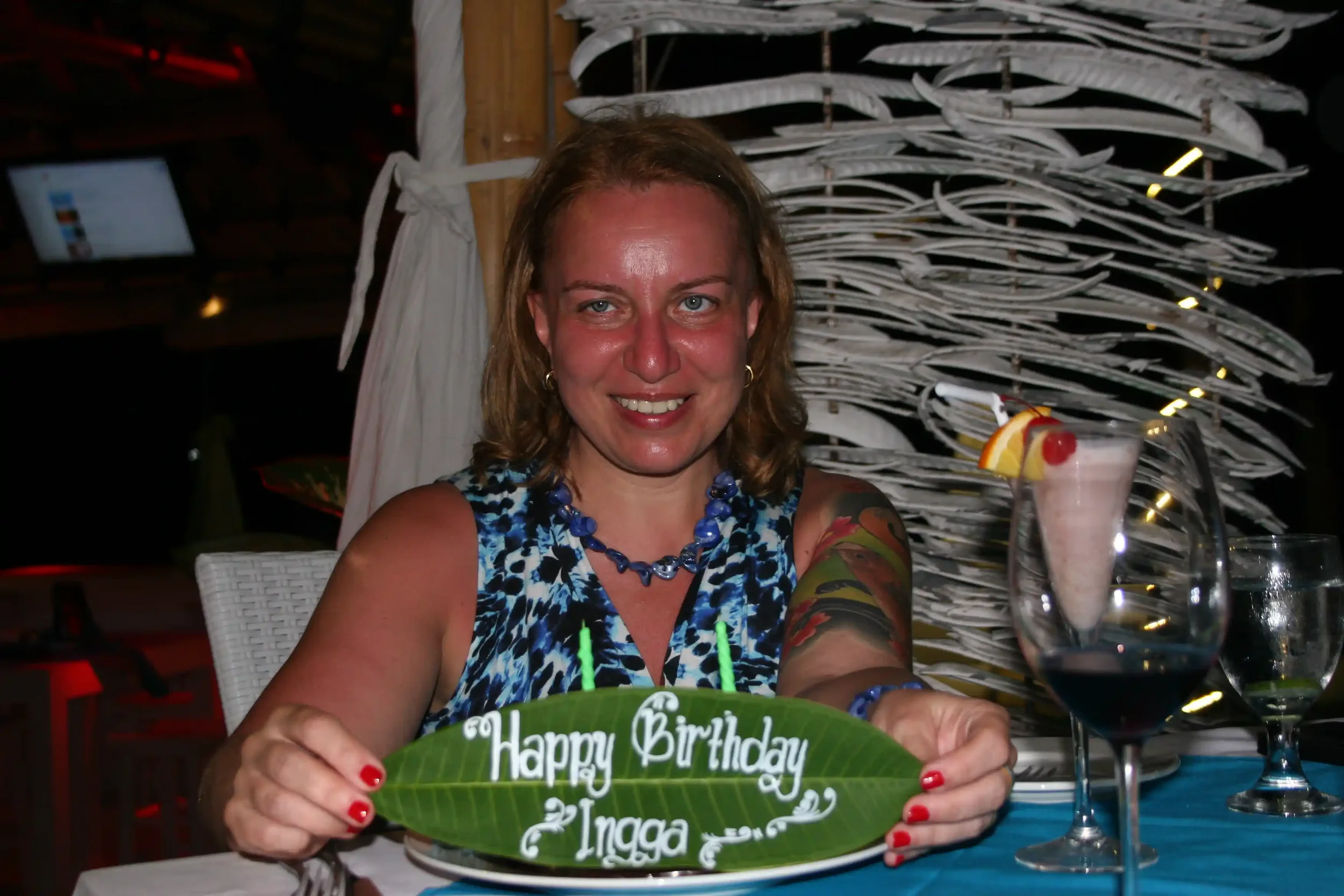
So picture our faces when we arrived at the restaurant for the celebration and found four other people there, four, who were also leap year babies. The odds of that table do not bear thinking about. I will only say that we had a very good night together.
We were looking forward to a perfect Nyepi. We had started stocking up on food, because Lovina is small and on that day everything, truly everything, is shut. And then life did what life does in this story. Sad news reached me from home. I had to leave Bali at once and fly to Russia. Nyoman, of all people, was the one who drove us to the airport. It was the day before Nyepi. We made it out in the evening, in the last hours before the island went silent.
Which means we are not finished
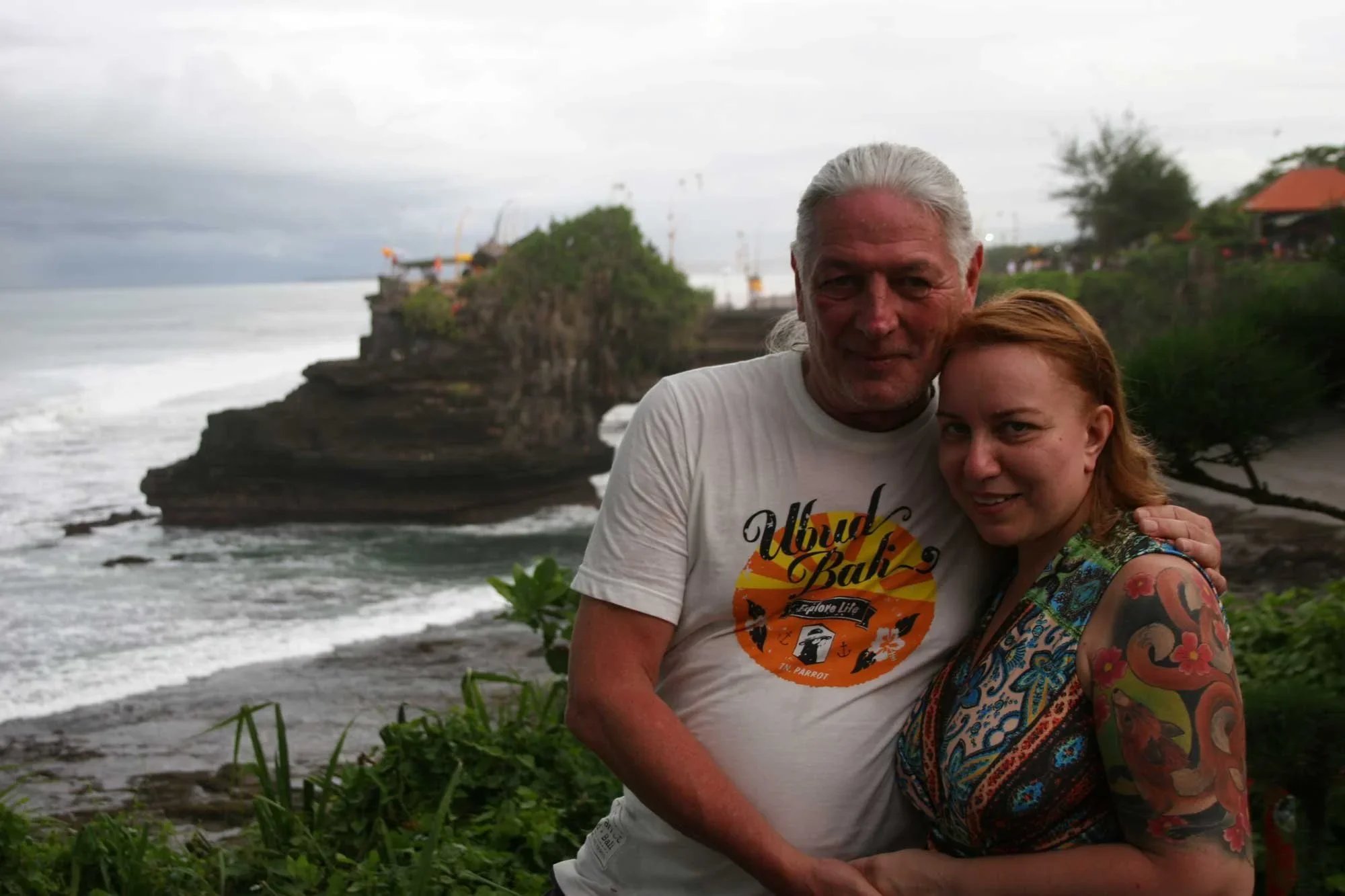
On our last evening we drove out to the water and stood on the rocks while the sea did what it does. Randy put his arm around me. Someone took the picture. We did not know yet that the news from home was already on its way, only that the light was very good and we were, both of us, exactly where we wanted to be.
So this is where we are. We thought that trip would be our last one to Bali. It turns out we left things undone. We never got our Nyepi. We never finished that conversation with Nyoman, the one that needs more than an afternoon over an old journal.
Next year we are going back. To see Nyoman again, and to finally spend the Day of Silence on the island that taught us how to be quiet. I will tell you all of it. I promise it won't be boring.
………..
Up next: Nyepi, the ogoh-ogoh fires on the beach, and the friend we went back for.